Feature-News
Flightmare 2026: Why Flying Has Become So Unbearable
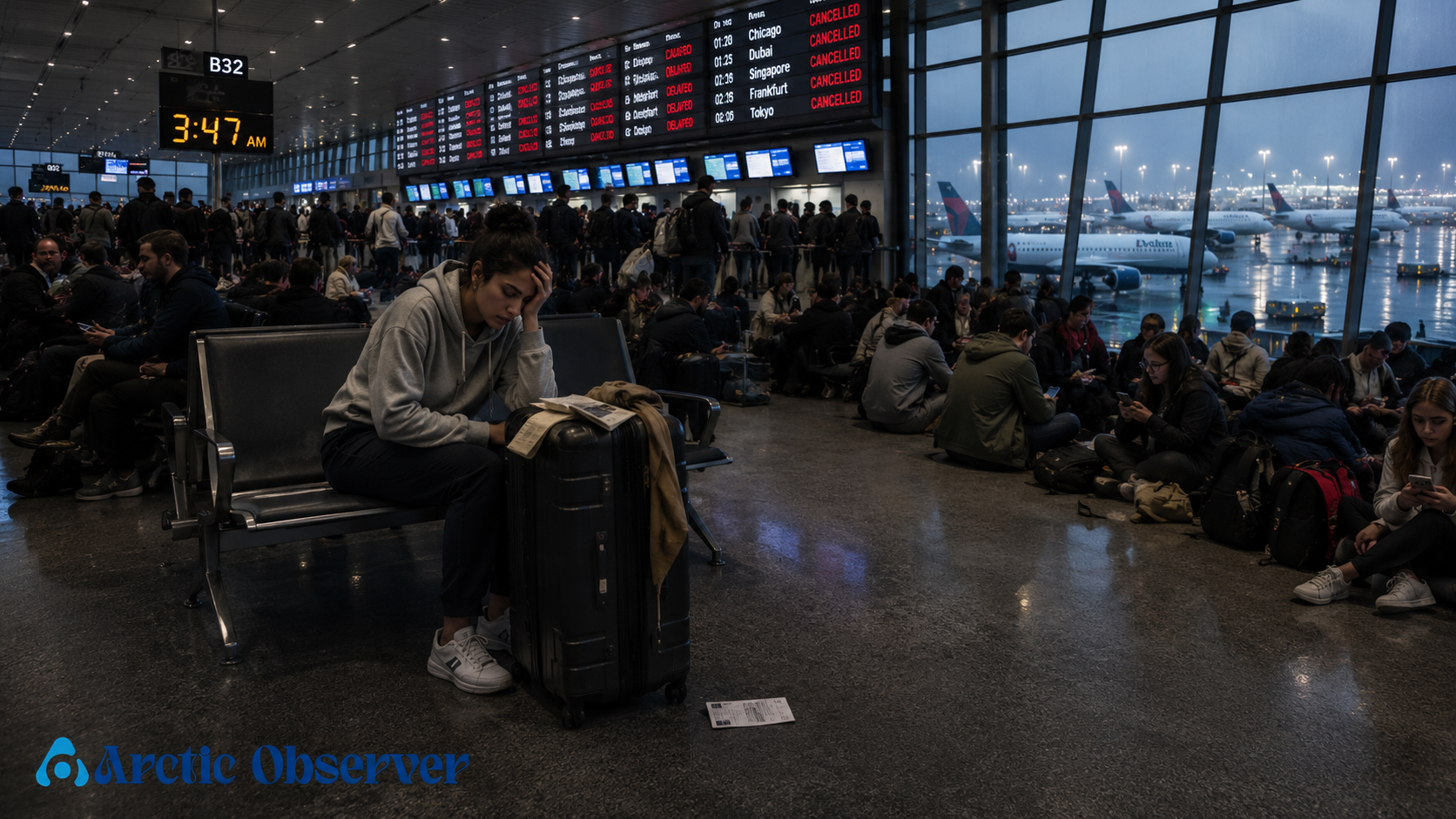
Maria Hernandez finally collapsed on a bench in Terminal 5 at Heathrow at 3:47 AM. Her flight to Chicago was delayed four times and ultimately cancelled. The airline's chatbot offered her a rebooking for Thursday, though it is currently Monday.
"I have cried twice today," she said, pointing to her rolling piece of luggage that now resembles unwanted furniture. “The man next to me just FaceTimed his girlfriend to propose because he cannot make it to her wedding on time. This is no longer flying; this is surviving!”
Maria is not alone. Millions of people traveling around the world have learned that the romance associated with air travel has been replaced by a frustrating series of cancellations, reroutings, and announcements of "sorry, we are unable to assist you" while the staff of the industry work so hard to resolve this situation.
The Numbers That Make Pilots Wince
Let us talk about the data again but this time as we talk about that data, let’s look at the people that have been hurt or lost because of the numbers.
In the last 30 days there have been approximately 12,400 flights that have disappeared from flight departure boards in Europe, which are almost /1070o+/- of a plane of travelling Business deals, funerals, first family holidays in many years, all gone, and/or removed. There have been another 67,000 flights that have arrived at an airport late causing both long connection times and short connections. Here is what the rest of the world’s data from this last 30 days looks like from our reality-based airline featured industry waning:

| “Every one of those numbers is a human story,” says retired ATC coordinator James Oluwole. “A grandmother missing a birth. A cancer patient whose clinical trial appointment is gone. People forget that.” |
The Fuel Crunch: When Math Breaks Hearts
Every airline’s route planning office is covered in red ink on whiteboards in the current day. Jet fuel prices have gone up significantly since early January — by almost 38%. Because of this increase in jet fuel prices, the routes that made money last year at Christmas are now losing money before take-off.
"We had to cancel the direct flight from Munich to Cape Town last month," said an airline planner with a European airline that was not named. "It was a wonderful flight. Customers loved it, and there was a lot of traffic. However, due to the longer route around the Middle East, each flight added 900 kilograms of fuel (one way). Therefore, we could not continue the service."
As a result of these significant increases in fuel prices, airlines are contracting their operating airspaces, starting with the smallest metropolitan markets going until you must drive to the next closest city to catch a flight that used to be within 20 minutes of your house.
Europe’s Crowded, Cranky Sky
If you happen to have flown above the Baltic Sea or through Eastern European airspace in recent times, you may have noticed that the flight track of your mobile device looked very zigzag and curvy; that did not happen because of an error that occurred due to some level of fear.
More recently, due to GPS interference and tensions between countries, former routes connecting Europe and Asia have now become no-fly zones. Pilots are spending anywhere between 15 to 40 additional minutes in the air on many Europeans to Asian routes since country-to-country trust in each other's airspace has been broken.
“My flying career began 22 years ago,” commented Captain Lena Brandt who has flown for the German airline Lufthansa. “I used to fly from Poland to Russia in a straight flight path but now I fly south into Turkey before heading east to fly on to Russia. Yes, it is gorgeous scenery; however, I am more exhausted by the time I arrive which is a safety consideration.”
Remember Heathrow 2025? It Never Really Ended.
The horror image for airline operations manager from last year’s complete meltdown at London Heathrow Airport after an electricity substation failure, resulting in: screens going blank, jet bridges locking up on the ground, and virtually every departure of an aircraft being delayed for several hours.
However, the real disaster was the cascading effect throughout the world with aircraft being rerouted to alternate destinations (ex. Boston, Dubai, Singapore etc.), crews reaching the maximum working limits, hotels being sold-out.
“We are putting a 21st century system on 20th century infrastructure,” states Dr. Anjali Mehta (aviation risk consultant). “When a transformer goes down in London, it causes a family in Ohio to miss their cruise. That is NOT resilience – that is gambling.”
The Plane Shortage You Haven’t Heard About
Something else that's quietly occurring away from the terminals is that there are not enough new airplanes. Boeing and Airbus are both having delays in delivering new airplanes due to supply chain availability issues, titanium material shortages and engine development delays, to name a few. All the airlines that purchased new fuel-efficient airplanes in 2022 are still waiting for them.
So, what do airlines do? They continue flying the older airplanes. That old 737 from the 1990's? It's still flying. That regional jet whose armrests are all worn? It is still flying across the Rockies.
"The average age of airplanes is getting older," says Dave Rawlings, an airplane mechanic at Chicago O'Hare International Airport. "Older airplanes tend to break more. When they break, they take longer to return to service than a newer airplane would. While an older airplane is out of service waiting for repairs, that means there are cancelations of flights. When flights cancel, I get yelled at by the people who have had their vacations canceled as if I have canceled them."
The Human Forecast: What to Expect
In their quarterly calls, airline CEOs are honest–though they aren't necessarily negative. They will not have a solution by Christmas. Now, here is what the airline experience looks like for the remainder of 2026 from a passenger's perspective.
- Higher fares: Not by 10% more; expect 30-40% more for last-minute coupons in certain markets.
- Schedule changes: Has Airline changed your schedule again? Look for more. Rinse and Repeat.
- Longer total travel times: If your booked "direct" flight is rerouted, it may now take 9 hours as opposed to 7 hours due to unknown delays.
- Peak travel times will feel like a war zone – July, August, December – bring an empty stomach, patience, and a plan B.
But It’s Not All Doom
Surprisingly enough, demand for flights hasn’t dropped. There are still families who want to reunite, businesses that prefer to meet face-to-face, and, perhaps most importantly, people who want to be able to go to other locations. Oddly enough, this needs to go from one place to another seems to have some sort of unwillingness about it.
There are also signs that the future will be better than the past. Fuel prices appear to be stabilizing at an early stage. Delivery of new planes is expected to start ramping up in early 2027. Airlines have started to quietly redo their route maps for leaner, smarter, and less subject to the whims of the various political/racial/economic/etc. problems within our world.
According to Captain Brandt as she is getting ready to begin another marathon flight, “We will eventually prevail. We will get to the end of this ride. Buckle your seatbelt now. It is going to be a wild ride, in all respects.”
Travelers Should Take Note:
Air travel remains safe but can be subject to many changes. Prepare yourself for possible schedule delays as you would if rain were predicted - always try to book a flight directly to your final destination instead of taking connecting flights; fly early each morning; if you see Maria Hernandez crying on a bench at an airport, buy her some coffee because she has been waiting since Monday.
By Antti Lehtonen, International Aviation Desk