Feature-News
Espoo Steps Up Battle Against Invasive Species Threatening Local Nature!
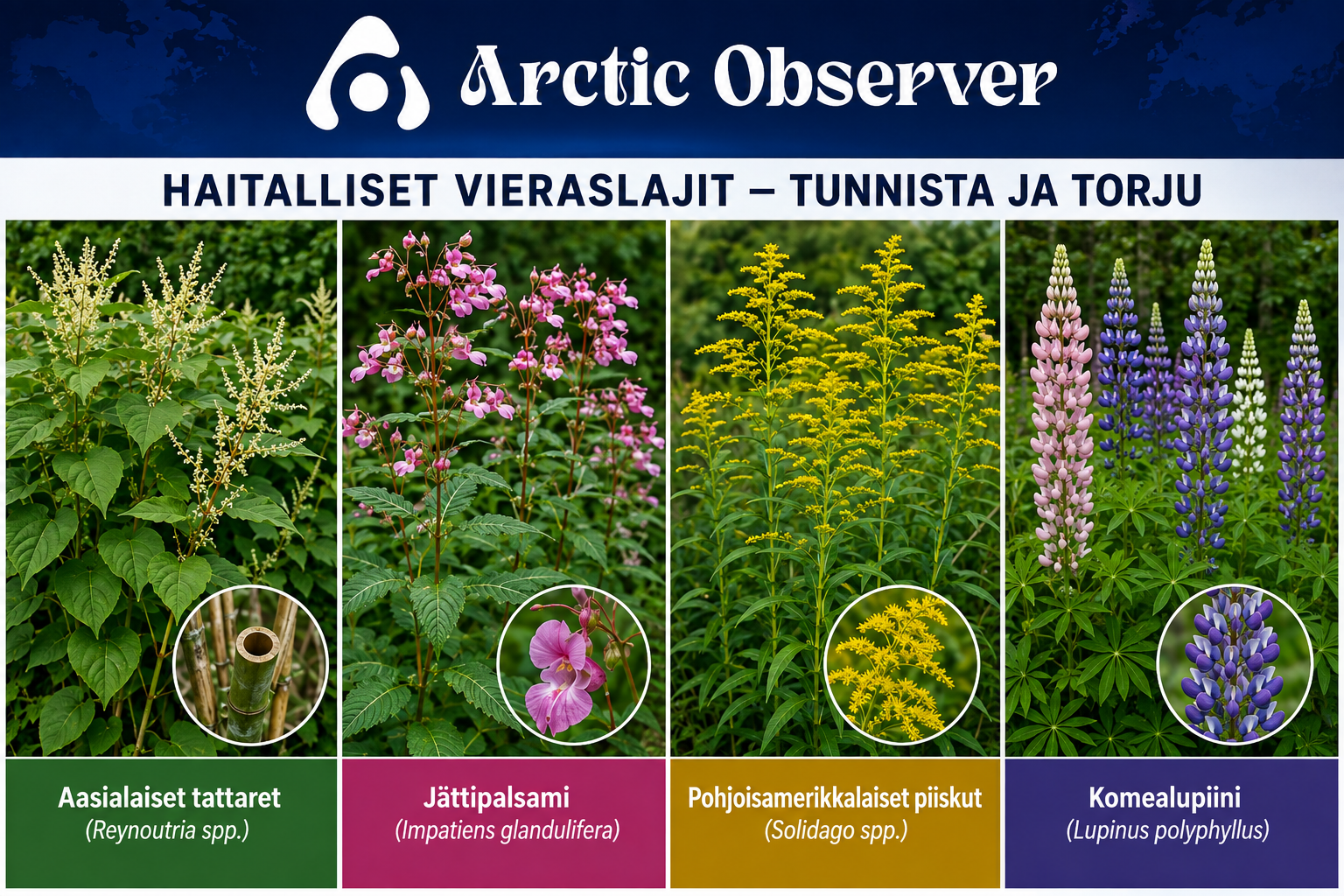
Espoo Steps Up Battle Against Invasive Species Threatening Local Nature
Authorities urge residents to help protect biodiversity by identifying and removing harmful alien plants
By Arctic Observer
ESPOO — The City of Espoo is intensifying its efforts to combat several invasive alien plant species that are spreading across roadsides, parks, forests and natural habitats, posing an increasing threat to Finland's native biodiversity.
According to guidance published by the city, four invasive species require particular attention: Asian knotweeds, Himalayan balsam, North American goldenrods, and large-leaved lupine. These plants have either been designated as nationally harmful invasive alien species or are regulated under European Union legislation because of the ecological damage they cause.
Aggressive Invaders
Among the most challenging species are Asian knotweeds, including Japanese knotweed, giant knotweed and their hybrid, Bohemian knotweed. These fast-growing plants can reach up to five metres in height during a single summer and spread rapidly through extensive underground rhizomes. Their dense growth suppresses native vegetation and even prevents the germination of woody plant species.
Equally concerning is Himalayan balsam, an invasive species regulated across the European Union. Although known for its attractive pink flowers, the plant forms dense colonies that outcompete native vegetation while attracting pollinators away from indigenous flowering plants. Because its shallow root system provides little soil stability, riverbanks invaded by Himalayan balsam become increasingly vulnerable to erosion.
Native Plants Losing Ground
The report also highlights North American goldenrods, which spread through both seeds and root fragments. These perennial plants dominate meadows, roadsides and open habitats, gradually replacing native wildflowers and reducing biodiversity.
Another rapidly spreading species is the large-leaved lupine. While often admired for its colourful blue, purple, pink or white flower spikes, the plant enriches the soil by fixing atmospheric nitrogen. This change favours lupine itself while displacing native meadow plants that thrive in nutrient-poor conditions. It also competes with native flowers for pollinating insects, further disrupting local ecosystems.
Long-Term Control Required
Removing invasive species is rarely a one-time effort.
The City of Espoo recommends repeated mowing, digging up plants together with their roots where possible, and, in some cases, covering affected areas with weed-control fabric for several years. Chemical treatment may also be used for Asian knotweed by applying herbicide to cut stems and newly emerging leaves. Disposal methods differ depending on the species and whether seeds have formed, making proper handling essential to prevent further spread.
Community Effort
Espoo already carries out roadside mowing, habitat management and mapping of infestation sites. The city also relies on volunteer efforts to control species such as Himalayan balsam, particularly near valuable forests and protected natural areas.
Environmental authorities stress that public awareness remains one of the most effective tools in preventing invasive plants from spreading further. Residents are encouraged to learn how to identify these species and remove them responsibly before they establish larger populations.
As Finland continues its efforts to safeguard native ecosystems, controlling invasive alien species is becoming an increasingly important part of protecting biodiversity for future generations.