Policy & Updates
Sweden Confirms 458 Britons Have Been Deported or Forcibly Removed Since Brexit
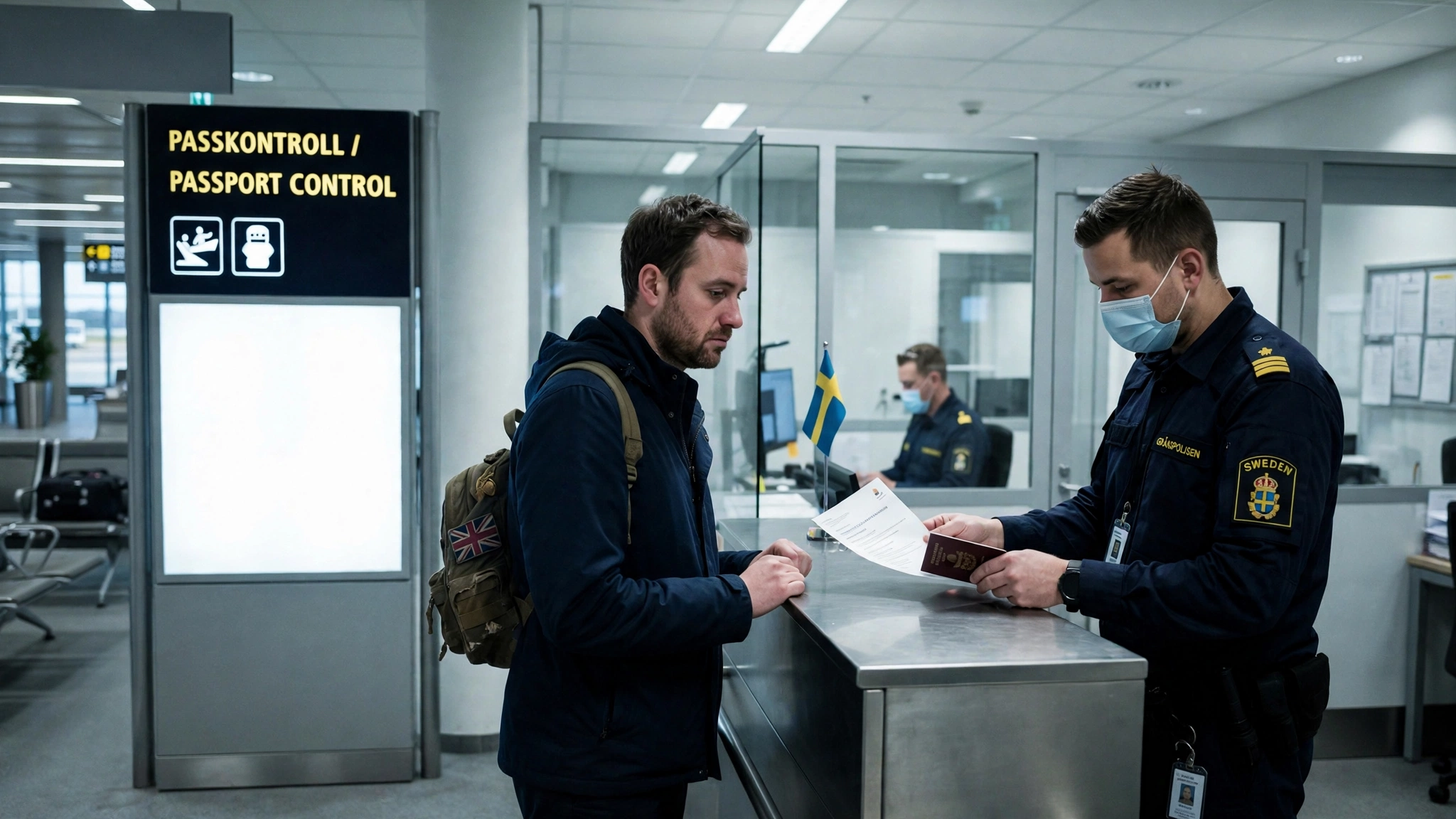
STOCKHOLM — Swedish authorities have confirmed that 458 British citizens have been deported or forcibly removed by police since Brexit, revealing the scale of a controversy that has renewed criticism of Sweden's handling of residence rights for some UK nationals.
The figure was reported by The Guardian on 5 September 2026 and represents the first official disclosure of the number of British citizens who have been physically removed from Sweden since the UK's departure from the European Union.
The issue has attracted growing attention after several high-profile cases involving British nationals who had lived in Sweden for many years, in some cases since childhood.
Nearly 2,500 Britons Ordered to Leave
The number of people physically removed is only part of the wider picture.
According to figures previously reported by The Guardian, 2,490 British nationals were ordered to leave Sweden between 2021 and 2025. This was reported to be the highest number among EU countries dealing with the post-Brexit residence status of British citizens.
However, an order to leave does not necessarily mean that a person was deported by police. Some may leave voluntarily, challenge the decision or pursue other legal options.
The newly confirmed figure of 458 deportations or forced removals therefore provides a clearer picture of how many cases resulted in physical removal.
Why Are Britons Facing Removal?
Before Brexit, British citizens could live and work in Sweden under EU free-movement rules.
Following Brexit, British citizens who were already legally living in Sweden before the end of the transition period were generally required to secure their rights under the EU–UK Withdrawal Agreement.
Sweden adopted a system requiring affected British nationals to apply for a specific post-Brexit residence status.
Campaigners have criticised the system, arguing that some long-term residents lost their right to remain because they failed to apply correctly or before the relevant deadline, despite having spent years—or even decades—living in Sweden.
The controversy has been fuelled by cases involving elderly residents and people with deep family, employment and social connections in the country.
Long-Term Residents Among Those Affected
Recent cases have highlighted the human impact of the policy.
One British man, John Sellers, was deported despite having lived in Sweden since the age of 10. His case received significant attention after it was reported that he had built most of his life in Sweden.
Another case involved an elderly British woman who had lived in Sweden for more than two decades and faced removal after problems connected to her post-Brexit residence status.
Critics argue that such cases show that Sweden's system has sometimes been applied too rigidly.
The Swedish government, however, has defended its approach, with Migration Minister Johan Forssell arguing that Sweden has followed its obligations under the Brexit Withdrawal Agreement. The European Commission has also previously indicated that Sweden's residence system is compatible with the agreement.
Pressure Grows for a More Flexible Approach
The latest figure of 458 forced removals is likely to increase pressure on Swedish authorities to reconsider how cases involving long-term British residents are handled.
Campaign groups and politicians have argued that people who have lived in Sweden for many years should be given greater opportunities to regularise their residence status, particularly where they have strong ties to the country.
Some opposition politicians have called for a more compassionate approach and for affected British nationals to be given another opportunity to apply for residence status.
The issue has also been raised with British authorities through political and diplomatic channels.
Sweden's Migration Rules Have Also Become Stricter
The controversy comes at a time when Sweden has introduced broader reforms aimed at tightening migration and citizenship rules.
On 6 June 2026, new and stricter requirements for Swedish citizenship entered into force after being approved by the Swedish Parliament.
Under the new rules, the general residence requirement for citizenship increased from five years to eight years.
Applicants are also generally required to:
- Demonstrate the ability to support themselves.
- Show sufficient knowledge of the Swedish language.
- Demonstrate knowledge of Swedish society.
- Meet stricter requirements relating to an orderly and honest lifestyle.
The Swedish Migration Agency says the self-support requirement generally means applicants must have stable income and meet a minimum income threshold. The rules contain exemptions for some groups.
For knowledge requirements, the citizenship tests are being introduced gradually. The first part, covering knowledge of Swedish society, began to be introduced in August 2026, while Swedish-language testing is scheduled to be introduced in stages later.
These citizenship reforms are separate from the Brexit residence controversy. However, together they reflect Sweden's wider political shift towards stricter migration and citizenship requirements.
What Happens Next?
For the British nationals affected by post-Brexit residence rules, the immediate issue remains whether Sweden will introduce a more flexible solution for long-term residents who missed or failed to complete the required residence process.
The confirmation that 458 British citizens have been deported or forcibly removed has added new weight to the debate.
While Sweden maintains that its legal procedures have been followed, campaigners argue that the cases raise serious questions about whether long-term residents with deep connections to the country should be treated differently.
For now, the issue remains politically sensitive—and the newly released figures are likely to keep Sweden's treatment of British residents firmly in the spotlight.
The deportation and removal figure, as well as the broader controversy surrounding long-term British residents, was reported by The Guardian on 5 September. Earlier reporting documented the 2,490 orders to leave between 2021 and 2025 and the Swedish government's defence of its legal approach.
The citizenship reforms are confirmed by the Swedish Government, the Swedish Parliament and the Swedish Migration Agency.
Sources:
- https://www.theguardian.com/politics/2026/sep/05/sweden-britons-deportations-brexit
- https://www.regeringen.se/pressmeddelanden/2026/06/nya-krav-for-svenskt-medborgarskap-trader-i-kraft
- https://www.riksdagen.se/en/news/articles/2026/apr/29/more-stringent-requirements-for-swedish_cmsda89d1d5-5403-402f-9a7c-61b4ed37538den/
- https://www.theguardian.com/world/2026/sep/02/swedish-minister-removals-deportations-britons-brexit