Politics
Sweden Election Enters Final Stretch as Opposition Lead Narrows
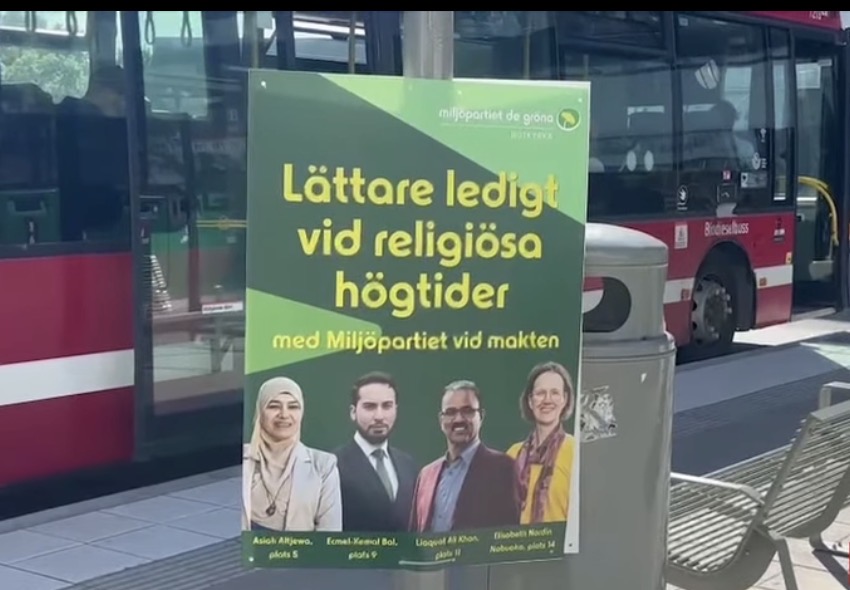
Sweden is heading into a closely watched parliamentary election on September 13, with the centre-left opposition maintaining an advantage over the governing right-wing bloc, but the gap narrowing as the campaign enters its final days.
The election will determine all 349 seats in the Riksdag, Sweden’s parliament, alongside regional and municipal elections. Prime Minister Ulf Kristersson’s centre-right government is seeking another term, while opposition leader Magdalena Andersson and the Social Democrats are campaigning to return to power.
Recent opinion polls suggest the race has become significantly tighter. A Demoskop poll published on September 3 put the centre-left parties at 50.6 percent, compared with 47.3 percent for the governing bloc and its parliamentary ally, the Sweden Democrats. The three-point gap was one of the narrowest recorded during the campaign.
The latest Verian/SVT poll, conducted between August 20 and September 2, showed the Social Democrats at 29.2 percent, followed by the Sweden Democrats at 18.9 percent and the Moderates at 16.4 percent. The Left Party and Green Party were both around 8 percent, while the Centre Party stood at 7.4 percent and the Christian Democrats at 6.3 percent. The Liberals were at 3 percent, below the four-percent threshold required to enter parliament.
The position of the Liberals could become crucial. Their failure to cross the parliamentary threshold could weaken the governing bloc’s chances of retaining power, even if the combined support for the right-wing parties remains competitive.
Immigration, crime, the economy and the future of Sweden’s welfare model have emerged as major issues in the campaign. The government has continued its tougher approach to immigration, including a controversial programme offering non-EU residents with residence permits financial incentives to leave Sweden voluntarily. The policy has been strongly associated with the government’s cooperation with the Sweden Democrats.
Crime and gang violence are also central to the political debate. Sweden has recorded a sharp fall in shootings compared with the peak of recent years, with 48 shootings and 12 deaths reported through August 2026, compared with 391 shootings and 62 deaths in 2022. The government has highlighted the decline as evidence that its tougher policies are working, while the opposition argues that prevention and social measures must play a larger role.
For Andersson, the election campaign has also focused on economic growth and a new green industrial strategy. She has promised to strengthen Sweden’s position in areas such as fossil-free steel and green mining, while defending the country’s welfare system and continued cooperation within NATO and the European Union.
The election is also taking place amid heightened concern over foreign interference and disinformation. Swedish authorities have increased efforts to protect the vote from malign information influence ahead of the September 13 election.
Interest in the election appears high. Sweden’s Electoral Authority said on September 8 that more than two million people had already voted early, 32 percent more than during the corresponding period before the 2022 election.
With only days remaining, the outcome remains uncertain. The centre-left opposition has held an overall lead for much of the campaign, but the narrowing gap means that smaller parties, undecided voters and the final turnout could play a decisive role in determining who will form Sweden’s next government.