Security
Europe’s Satellites Under Attack: Space War Is Real
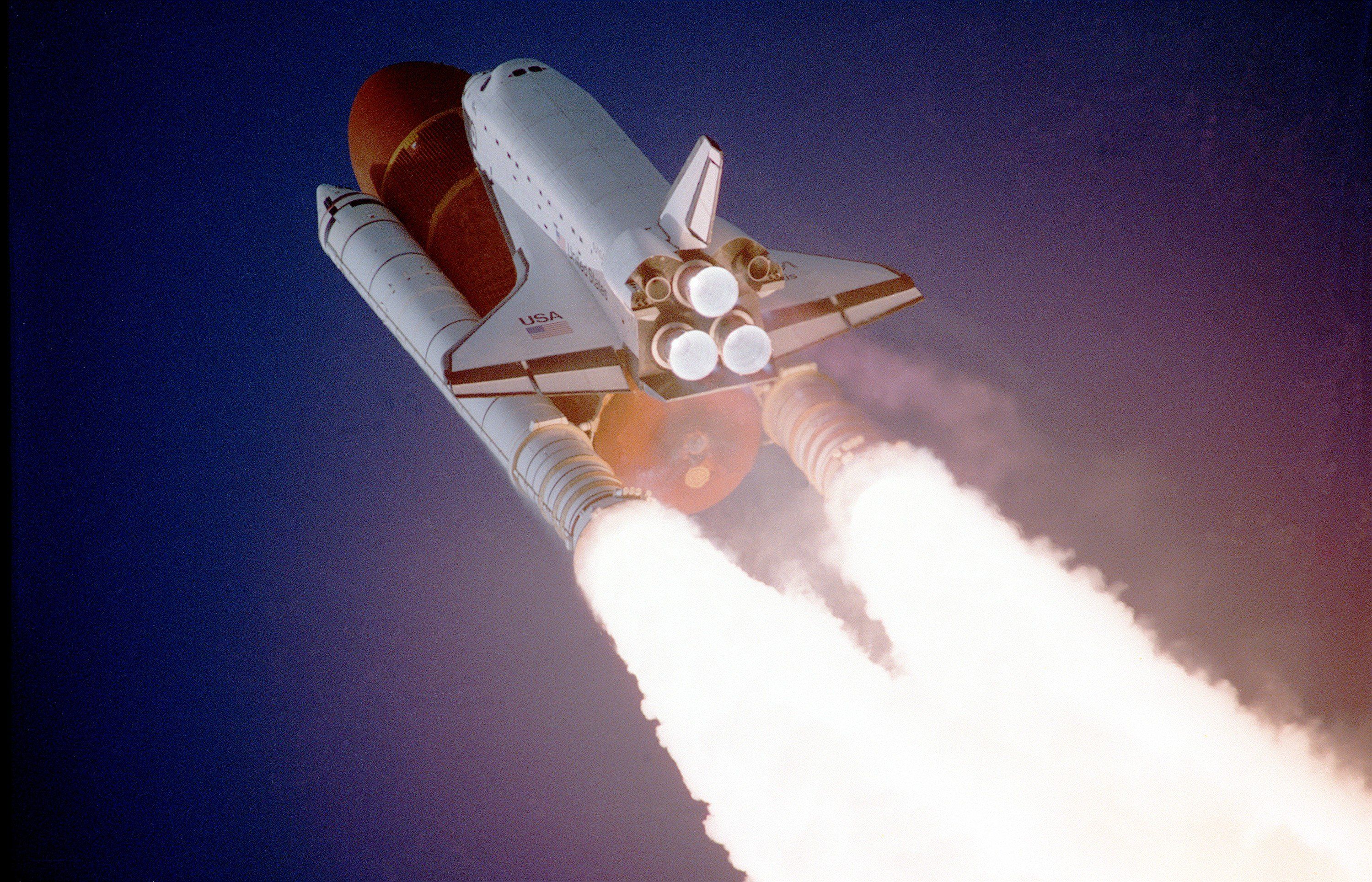
If Europe’s satellite navigation were shut down, traffic and bank transfers would stop. A battle for vital infrastructure is already happening in orbit, but Europe’s response to the space threat is slow.
Hackers Have Tried to Break Galileo’s Secret Codes
The encrypted codes of Galileo — Europe’s most important satellite navigation system — have been targeted by attackers. In addition, there have been attempts to steer EU satellites away from their normal orbits. This information comes from Timo Pesonen, Director-General of the European Commission’s Directorate-General for Defence Industry and Space.
“They [hostile actors] are trying to break Galileo’s code, but they have never managed to get into it. It would be a catastrophe if the code were broken. Then the worst possible scenario would come true: you could no longer trust your navigator, and it could guide the user to a completely wrong place,” Pesonen says.
The EU also has about 40 large satellites in orbit that have faced various interference attempts. In some cases, satellites have been pushed away from their normal orbits. According to Pesonen, it has not always been clear whether these were deliberate actions or accidents. However, these cases show how the competition between major powers over critical infrastructure in space has changed.
Satellites Are at the Centre
When people talk about space war, they often think of the flashy battle scenes from science fiction movies. But the truth is more boring. Today’s struggle is mainly about satellites, which are essential for communication, intelligence, tracking troops, guiding precision weapons, and navigation services.
Space warfare can mean attacks on satellites from the ground. Methods include anti-satellite missiles, electronic jamming, cyberattacks, and laser systems. For example, in November 2021, Russia destroyed its own retired Kosmos 1408 satellite. Soon after the test, a well-known Russian state television host, Dmitry Kiselyov, claimed on air that Russia could destroy all GPS satellites if NATO crossed its “red line”.
Space warfare can also involve actions between satellites, such as observing, approaching, and interfering with other satellites. Missile defence is also partly considered space warfare. China and the United States are the main competitors for space dominance, but Russia is also a strong player.
Juha-Pekka Luntama, head of the European Space Agency’s (ESA) space weather office, says that all normal forms of warfare exist in space, but they look a little different than on the ground. “They test another state’s ability to detect movements and new satellites, and they may test jamming with lasers or radio waves, and they also test eavesdropping,” Luntama says.
Space warfare also includes weapons placed in space. In September, the U.S. Space Force publicly announced for the first time that it had placed weapons systems in orbit. U.S. Air Force and Space Force Secretary Troy Meink said on 14 September at the Air, Space & Cyber conference that the United States now has space control weapons systems in orbit that can defend U.S. forces from hostile actors. He did not say what kind of weapons have been placed in space or how many there might be.
Impact on the Ground
A possible space war would also affect ordinary people’s daily lives, because space has become a central part of society’s security and economic performance. For example, GPS systems based on satellite navigation are used in navigation, aviation, maritime transport, and logistics. Satellite navigation also produces a precise time signal needed for telecommunications networks, banking systems, and other digital services.
Hybrid interference is already happening. Satellites can be jammed by covering the satellite signal with a strong radio broadcast or by feeding false signals to receivers.
Europe’s Space Shield
Europe is currently debating whether the union should build a common space shield to protect its satellites or leave space defence to member states. EU Defence and Space Commissioner Andrius Kubilius has stressed that Europe’s security depends more and more on its own space capabilities. For this reason, the Commission is preparing the so-called European Space Shield initiative. It is the EU’s attempt to create a European equivalent to U.S. space security thinking by combining satellite protection, space situational awareness, secure communication, intelligence, and early warning into the defence system.
The space shield initiative is facing headwinds, especially from larger EU member states that have their own interests in space. France and Germany in particular want to keep space defence in national hands. For example, France’s national space strategy emphasizes active national defence capability in space. The goal is to protect its own satellites from growing threats in space, for example with surveillance and patrol satellites. In September, seven EU countries led by France and Germany demanded that the Commission limit the space shield initiative to protecting only the EU’s common space systems. These countries oppose the idea that the EU itself would build or operate actual military space capabilities on behalf of member states.
In the Commission, however, it is stressed that space security cannot be built only nationally. Pesonen says that common European systems are necessary. “Especially from the point of view of a small member state, it is important to have European systems, because small member states do not have the possibility to develop alone, unlike large member states.” Pesonen reminds us that no single member state could have built the Galileo navigation system, the Copernicus Earth observation programme, or the future IRIS² secure communications network on its own. He says the same logic should guide the building of the European space shield. “The space shield or space defence must also be done together and openly with NATO, on the principle of joint use and sharing of capabilities,” Pesonen says.
ESA’s Biggest Concern
Although the militarization of space raises growing concern, experts at the European Space Agency (ESA) identify space debris as the biggest risk. French ESA astronaut Thomas Pesquet says he has not seen any signs at the International Space Station (ISS) of the research station being used for anything related to war. “The only thing that worries us is space debris,” the astronaut says. Currently, about 10,000 satellites operate in space, but in a few years there could be 100,000. Pesquet says that destroying satellites as a show of force or in weapons testing can create huge amounts of debris that stays in orbit around Earth and threatens other systems operating in space.
ESA head Luntama also considers the debris problem the most serious long-term threat. He warns of the so-called Kessler effect, in which debris from collisions causes new collisions and starts an uncontrolled chain reaction. That is why he does not think it is a good idea for Europe to have the ability to destroy enemy satellites with missiles. “When a satellite is destroyed, its remains stay in orbit. Many people know this risk from the movie Gravity. Although the physics in the movie is not entirely realistic, the basic idea is correct.” “It is scary, because then we would completely lose the possibility of using space for anything,” Luntama says.
Europe’s Vulnerabilities
Strengthening Europe’s space autonomy requires independent access to space. This is being strengthened by producing new European launch vehicles that can launch satellites into orbit. Europe is also strengthening the security and resilience of space infrastructure. According to ESA’s Luntama, satellite tracking should also be improved. “Europe lacks a comprehensive ground-based system for tracking all satellites, which is why it depends on the situational picture provided by the United States,” Luntama says. Another thing Europe lacks, according to him, is an operational space weather system that would ensure the availability of critical information for both civilian use and defence needs. Space weather can weaken the operation of satellites, radars, navigation systems, and communications links. “Such a disruptive environment can also give an adversary the opportunity to cover or disguise their own actions, making them harder to detect,” Luntama says. He believes a space weather system should be an essential part of Europe’s space budget.
French astronaut Pesquet hopes that the use of space can also remain as peaceful as possible in the future. The European Commission wants to ensure this with a new Space Act. Its goal is to ensure that space, which is becoming increasingly crowded, can also be used safely and sustainably in the future.
Fact Box: Space War
Space war is a struggle over satellites and the military advantages that space provides. It is military activity that targets satellites, space networks, positioning systems, intelligence systems, and the data they produce. Military satellites have been in space for decades. Several countries have also tested weapons designed to destroy satellites.
Key methods: In space war, satellites can be attacked from the ground, from the air, or from space. This can be done using missiles, jamming, or cyberattacks. Positioning (GPS, Galileo) or military communication can be disrupted. Intelligence can be blocked, for example by blinding or destroying imaging satellites. The goal is also to protect one’s own space systems from an adversary’s actions.
Key actors: United States, China, Russia.
Regulation: The 1967 Outer Space Treaty bans the placement of nuclear weapons and other weapons of mass destruction in space or on celestial bodies. However, the treaty does not ban all military activity in space, nor the use of conventional weapons against space systems.