Politics
Sanna Marin’s Possible Political Comeback: Finland’s Former PM Ready to Return in a National Emergency!
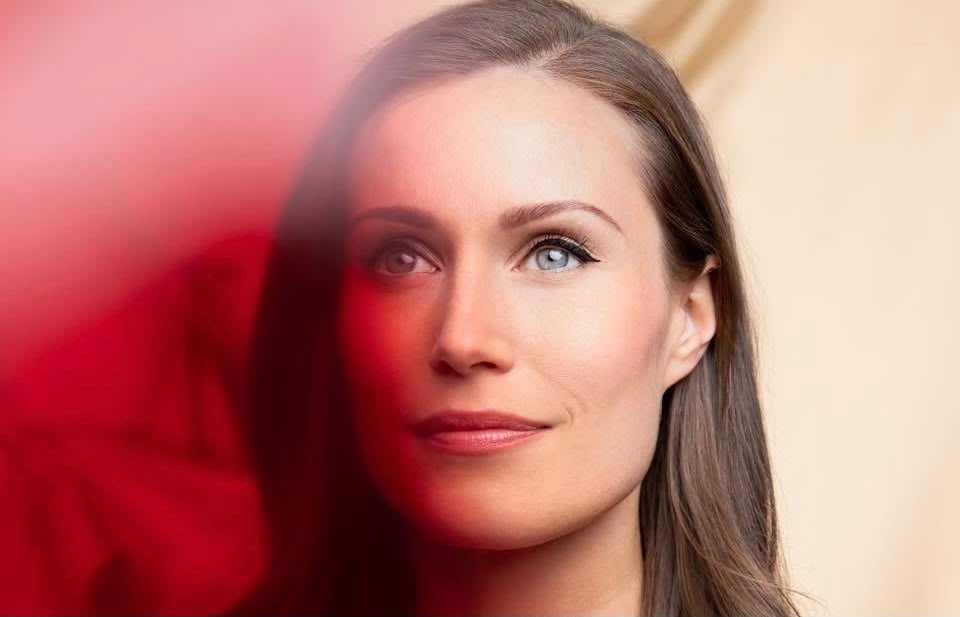
Finland’s former prime minister Sanna Marin has reopened a conversation about her political future, saying she would be prepared to return to politics if Finland faced a national emergency, including a possible Russian attack.
In an interview with Italian newspaper Corriere della Sera, Marin said a return to electoral politics was unlikely under normal circumstances, but she would make herself available if the country needed her.
Her remarks are significant not because they announce a return to politics, but because they come from a leader whose time in office coincided with some of the most consequential changes in modern Finnish history.
The Covid-19 pandemic, Russia’s full-scale invasion of Ukraine and Finland’s accession to NATO defined much of her premiership.
For Marin, the possibility of returning is therefore closely linked to the question of national leadership in a time of crisis.
For Finland, her comments raise another question: could one of the country’s most recognisable political figures once again become a central voice in its security and political debate?
From a Young Prime Minister to a Crisis-Time Leader
Born in Helsinki on 16 November 1985, Marin entered Finland’s political mainstream at a relatively young age. A member of the Social Democratic Party of Finland (SDP), she rose through local politics in Tampere before becoming a member of parliament and later serving as minister of transport and communications.
In December 2019, Marin became prime minister at the age of 34, making her one of the youngest serving heads of government in the world at the time. She led a five-party coalition government in a country known for its parliamentary traditions, consensus-based policymaking and strong public institutions. Her appointment also made her a prominent figure in international discussions about women in leadership and generational change in politics.
Her rise was more than a personal political achievement. It reflected the willingness of Finnish politics to entrust a relatively young leader with responsibility for a government facing increasingly difficult challenges.
But Marin’s premiership would soon be defined less by her age than by the crises that confronted her government.
Covid-19: Leadership Under Pressure
The coronavirus pandemic arrived only months after Marin took office. Like governments across Europe, her administration had to respond to a public health emergency that disrupted everyday life, businesses, education and international travel.
The crisis demanded difficult decisions about restrictions, public safety and the balance between individual freedoms and collective responsibility. It also tested the capacity of Finland’s public institutions to communicate with citizens and respond to rapidly changing circumstances.
Marin became a familiar face in international news coverage, representing a country that sought to manage the pandemic through public health measures and institutional coordination.
Her government’s handling of the crisis became part of her political legacy, although assessments of any administration’s pandemic response must account for the extraordinary circumstances, the decisions made by multiple authorities and the wider economic and social consequences.
For Marin, Covid-19 provided an early test of executive leadership. It also established a pattern that would continue throughout her premiership: making decisions under pressure while facing intense scrutiny at home and abroad.
Russia’s Invasion of Ukraine Changed Finland’s Security Policy
If the pandemic tested Marin’s ability to manage a domestic emergency, Russia’s full-scale invasion of Ukraine in February 2022 transformed the strategic environment in which Finland operated.
For decades, Finland had maintained military non-alignment while building strong national defence capabilities and preserving close cooperation with Western countries. Russia’s invasion fundamentally changed the political calculation surrounding Finnish security.
Marin’s government moved to seek NATO membership, backed by a broad political shift and growing public support for joining the alliance. Finland formally applied on 17 May 2022 and became a NATO member on 4 April 2023.
This was one of the most consequential foreign and security policy decisions in Finland’s modern history.
NATO membership was not the achievement of one politician alone. It involved parliament, the president, government institutions, political parties and public opinion. Nevertheless, Marin was prime minister during the process and became one of its most visible international advocates.
That experience is particularly relevant to her latest remarks. When she says she would return if Russia attacked Finland, she is speaking about a threat that already shaped a defining chapter of her time in office.
Her recent interview also signals a continued focus on European defence. She has called for faster modernisation of European armed forces, particularly in drone technology, and expressed a hard line on Russian military aircraft violating European airspace.
These positions place her within a broader European debate over deterrence, military readiness and the response to Russian aggression.
The 2023 Election and Her Departure From National Politics
Marin’s government lost the parliamentary election held in April 2023. The centre-right National Coalition Party finished first, followed by the Finns Party, with the Social Democrats in third place.
The result ended Marin’s time as prime minister. Her government submitted its resignation on 6 April 2023, remaining in a caretaker capacity until a new government could take office.
The election result illustrated an important distinction in evaluating her legacy. Marin remained internationally prominent, but that visibility did not translate into an electoral victory for her party.
Her government had faced debate over public spending, economic policy, debt and the direction of the welfare state. Voters were also weighing competing priorities, including economic management, taxation and immigration.
It would be simplistic to attribute the election result to any single issue. Parliamentary elections reflect a combination of leadership, party performance, policy disagreements and changing voter preferences.
In September 2023, Marin announced that she would leave parliament to become a strategic adviser at the Tony Blair Institute for Global Change. She said she had not ruled out the possibility of returning to Finnish politics in the future.
Her departure marked a shift from elected office to international policy work. It also gave her an opportunity to build a profile beyond the daily demands of Finnish party politics.
Why Her Latest Remarks Matter
Marin’s statement that she would be available in a national emergency is carefully qualified. She has not announced a return to the Social Democratic Party leadership, declared a candidacy or said she intends to contest the next parliamentary election.
Instead, she has described an exceptional circumstance in which she would reconsider her decision to remain outside national politics.
That distinction matters. An explicit commitment to run in an election would have immediate implications for party strategy. A conditional offer to return during a national emergency is a different kind of political message.
It can be read as an expression of public duty, a reminder of her experience in government and a signal that she has not entirely closed the door on political life.
It may also reinforce her image as a leader associated with Finland’s response to an unusually difficult period. The pandemic and NATO accession gave her experience in crisis management and international diplomacy, although neither guarantees that she would be the most suitable leader in every future emergency.
The key question is whether her statement remains a personal expression of readiness or develops into a more concrete political ambition.
Could Sanna Marin Return as Prime Minister?
A return to politics is possible, but several obstacles would stand between Marin and another premiership.
First, Finland’s political system requires parliamentary support. A former prime minister cannot simply resume the position. Marin would need to return through the political process, secure a mandate and command sufficient support in parliament to lead a government.
Second, her party would have to consider its own leadership and electoral strategy. Marin remains a prominent figure, but the Social Democrats’ future depends on more than the popularity of a former leader. Party organisation, policy credibility, economic proposals and voter confidence would all matter.
Third, Marin would need to decide whether she wants to return to the demands of national politics. Her current international advisory work offers a different platform for influencing policy without the daily pressures of party leadership and parliamentary government.
A national emergency could change those calculations. In such circumstances, experience, public trust and the ability to communicate clearly may become particularly important. However, the political response would depend on the nature of the crisis and the choices made by voters and elected representatives.
There is also a difference between being a nationally recognised figure and being the person best placed to lead a government. A crisis can increase demand for experienced leadership, but it can also require new approaches, different expertise and broad political cooperation.
A Leader Whose Legacy Is Still Being Written
Marin’s international reputation has often been shaped by her youth, her public image and her prominence among a new generation of European leaders. Yet her most enduring political significance may rest on the decisions taken during her time in office.
Her premiership coincided with a pandemic that challenged governments worldwide and a war that prompted Finland to abandon its longstanding military non-alignment and join NATO.
Those events placed Finland’s security, resilience and international relationships at the centre of her political career. They also gave her a level of crisis-era experience that few leaders acquire in ordinary circumstances.
At the same time, her legacy should not be reduced to international recognition or the two defining crises of her premiership. Domestic economic policy, public finances, social welfare and the electoral fortunes of her party remain important parts of any assessment.
Her latest comments suggest that she still sees national service as a possibility under extraordinary circumstances. They do not, however, establish that she is preparing a political comeback.
For now, Marin remains a former prime minister working outside Finland’s elected political institutions. Whether she returns will depend on her own decision, the direction of the Social Democrats, Finland’s political climate and the circumstances she has described.
The significance of her statement lies in the condition she has attached to a return: she would consider it if Finland faced a threat serious enough to require her participation.
In a country whose security policy has been transformed by Russia’s war against Ukraine, that condition is not merely hypothetical in the abstract. It reflects a central question facing Finland and much of Europe: what kind of leadership would the public expect if the current security environment deteriorated further?
Marin has left that door open. Whether she ever walks through it remains an open question.
Writer: Mikko Dani