War
Putin's New Playbook: Destroy Ukraine, Outlast Europe
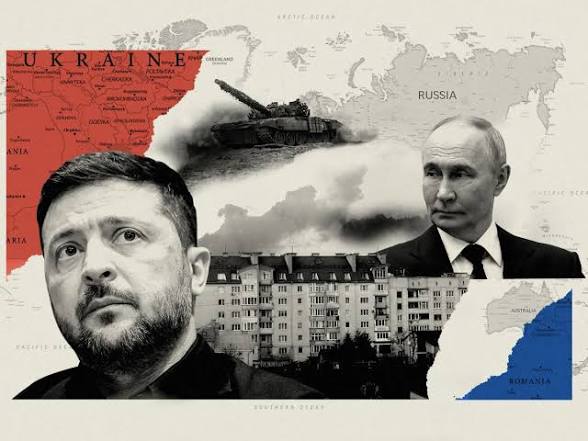
A researcher says Vladimir Putin has shifted his strategy in Ukraine. The focus is now on destroying Ukraine's economy and waiting for European support to crumble.
Timothy Ash, a Russia and Eurasia expert at Chatham House, says Putin is playing for time. Instead of launching a new mobilization, the Russian president seems content to hold the front lines in Donbass while waging a full-scale campaign against Ukraine's economy. Meanwhile, Putin has blocked efforts by Turkey, the United States, and others to broker a ceasefire on grain shipments in the Black Sea. As a result, Ukrainian grain exports have nearly stopped.
According to Ash, the goal is to wear down Ukraine's economy, weaken its military production, and break the fighting spirit of its people. The aim is also to push Ukraine into recession and create huge budget and trade deficits. "This would force Europe to spend even more money at a time when public finances are already strained across the continent – which in turn raises market concerns about fiscal sustainability in countries like France and Britain," Ash writes. "In my view, Putin's goal is to break the Ukrainians' will to fight and Europe's willingness to keep funding the war."
Trump "Showed a Light at the End of the Tunnel"
Ash says that US President Donald Trump's support for far-right parties in Europe – Germany's AfD, France's National Rally, and Britain's Reform Party – has essentially "shown Putin a light at the end of the tunnel." The point is that elections in several key EU countries next year are expected to bring new, more far-right governments to power. These governments are expected to at least cut, or even completely stop, European funding for Ukraine.
Ash specifically points to France's presidential election next April. "Putin likely believes that a Marine Le Pen victory would not only end French support for Ukraine, but also significantly complicate EU funding and support for Ukraine as a whole. Putin therefore sees an advantage in continuing the war through the winter until next May, when European support could collapse," he comments.
Le Pen, the far-right National Rally's presidential candidate, said last week that France can no longer afford to support Ukraine. She is also expected to push, together with Italy's Putin-friendly far right and Germany's AfD, to end sanctions against Russia if she wins.
Europe Should Prepare Now
Ash stresses that the war is becoming more and more expensive for Ukraine, and the EU's €90 billion funding package agreed last December is not enough. Ukraine itself has talked about a $27 billion gap in military funding in 2026 and a $32 billion gap in 2027. Ash says Europe should already be preparing for the situation and the risks related to the French election.
"Ukraine's funding should be protected from the effects of elections, for example through new financing arrangements or even by finally using the frozen assets of Russia's central bank in the West. Instead of European leaders showing leadership and vision, we see only delays and petty penny-pinching. We should send Putin a clear message: Europe and its remaining allies, excluding the United States, will provide everything needed to support Ukraine in this war," he argues.
The Rise of the Radical Right Is Already Visible
Stefan Lehne, a senior fellow at Carnegie Europe, points out in his own analysis that the fragmentation of party politics and the rise of the radical right are already having a major impact on the EU. "In today's unstable political environment, national political elites feel their power is on shakier ground, which inevitably affects their EU policies. These elites focus more on domestic affairs and push for short-term national interests; they have fewer resources to focus on long-term European questions and goals," he writes.
At the same time, the pro-EU consensus has fractured. The radical right has come to power in some countries, such as Italy, the EU's third-largest member. Meanwhile, center-right parties have become more cautious about European integration. This is exactly the kind of division Vladimir Putin has hoped for. Lehne stresses that Russia's war of aggression against Ukraine remains and will remain the EU's most urgent security challenge. Far-right parties, however, strongly disagree. He proposes tying Ukraine support to the EU's multi-year programs.
Dimitar Bechev, another senior fellow at Carnegie Europe, estimates that the far right may not necessarily succeed in steering EU policy in the direction Putin wants. But it can still cause so much chaos within Europe that potential geopolitical goals are effectively watered down. "From the Kremlin's point of view, this is not a bad outcome at all," the researcher says.