Business
Tesla’s New Roadster: A Flying Electric Supercar or an Overambitious Vision of the Future?
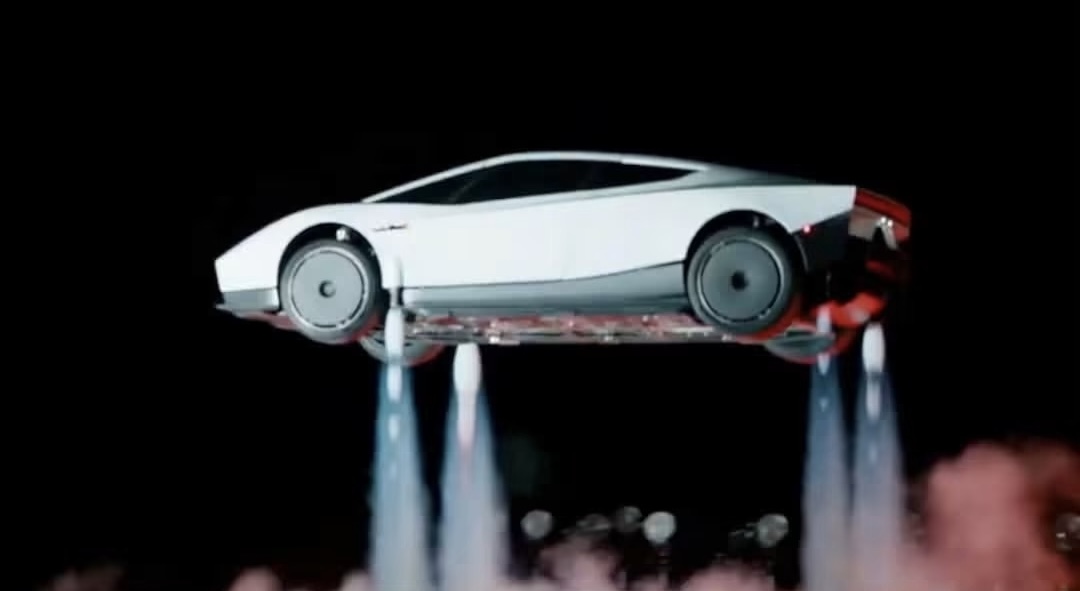
Tesla’s redesigned Roadster promises extraordinary acceleration, aerospace-inspired technology and a radical rethink of the electric sports car.
But with production still years away, major questions remain about safety, affordability, reliability and its place in the global automotive market.
Tesla has once again captured the world’s attention with the unveiling of its long-awaited next-generation Roadster on October 15, 2026. The electric sports car, presented at a SpaceX testing facility in Texas, represents one of the company’s most ambitious attempts to push the boundaries of automotive engineering. Featuring a dramatic demonstration involving rocket-style thrusters, upside-down movement and a brief airborne manoeuvre, the Roadster is designed to be far more than a conventional high-performance electric vehicle.
However, the spectacle raises an important question: will Tesla deliver a genuinely revolutionary production car, or is the Roadster an ambitious technology showcase whose practical value remains uncertain?
The answer depends on more than acceleration figures and futuristic demonstrations. It will ultimately depend on engineering, safety certification, price, production readiness and whether customers can use the technology in everyday life.
A sports car that challenges conventional engineering
The second-generation Roadster was first announced in November 2017. Tesla originally presented it as an all-electric supercar capable of challenging some of the world’s fastest production vehicles. The project subsequently experienced repeated delays as the company concentrated on expanding its vehicle production, battery technology and other business priorities.
The latest unveiling has revived interest in the project, but the redesigned vehicle remains a work in progress. Tesla chief executive Elon Musk has indicated that production is planned for 2028, meaning customers will still have to wait before they can assess a finished production model.
The Roadster’s most striking feature is its experimental propulsion technology. Tesla and SpaceX have explored the use of cold-gas thrusters, which release pressurised gas to generate thrust. Unlike a conventional rocket engine, this system does not rely on burning fuel to produce its thrust.
Tesla demonstrated the prototype performing unusual manoeuvres with the help of aerospace-inspired technology. The demonstration was intended to illustrate how the car might move beyond the limits of conventional road vehicles.
Yet a demonstration is not the same as a commercially available product. The vehicle’s final design, technical specifications and real-world capabilities must be established before its most extraordinary claims can be judged independently.
How does the new Roadster work?
At its core, the Roadster is an electric sports car. Its primary propulsion system is designed to provide rapid acceleration through electric motors, while its battery supplies the energy needed to drive those motors.
Electric motors have an important advantage over conventional combustion engines: they can deliver substantial torque almost immediately. This helps electric performance cars accelerate rapidly without the gear changes associated with many petrol-powered sports cars.
The Roadster’s proposed aerospace-inspired package adds another layer of complexity. Cold-gas thrusters can produce short bursts of force, potentially improving acceleration or enabling specialised manoeuvres. However, such a system requires pressurised-gas storage, additional controls and carefully engineered safety mechanisms.
Tesla has also demonstrated a suction-based system intended to help the vehicle maintain contact with a surface during unusual manoeuvres. This technology is particularly relevant to the company’s demonstrations involving inverted driving.
These features could represent important engineering experiments, but they also introduce questions about weight, energy use, mechanical complexity, maintenance and passenger safety.
Most importantly, the rocket-assisted functions should not be confused with ordinary electric driving. The vehicle’s everyday usefulness will depend primarily on its road-going powertrain, battery performance, braking, handling and charging capability.
Performance: How fast could it be?
Acceleration is one of the Roadster’s headline attractions. Tesla’s original Roadster website advertised a 0–60 mph time of 1.9 seconds, a top speed above 250 mph and a range of 620 miles. Those figures belonged to the earlier announced specification and should not automatically be treated as verified specifications for the redesigned production car.
During the October 2026 unveiling, Tesla showcased an acceleration claim of approximately 0.81 seconds to 60 mph in reporting about the event. The demonstration was extraordinary, but the figure has not yet been established as an independently verified result from a customer-ready production vehicle.
If a production Roadster can achieve acceleration anywhere near the most ambitious claims, it would occupy an exceptional position in the performance-car market. The critical distinction is between a theoretical or demonstration result and repeatable performance under controlled conditions.
Real-world acceleration depends on tyre grip, road surface, temperature, battery charge, vehicle weight and the precise measurement method. A car that produces an impressive result once must also be able to perform safely and consistently.
Top speed presents a separate challenge. At very high speeds, aerodynamic drag, tyre capability, braking performance and thermal management become increasingly important. Reaching a headline speed is only one part of building a vehicle that can operate reliably at that level.
Range and charging: The questions buyers will ask
Battery range remains one of the most important factors in the electric-car market. Tesla previously advertised 620 miles of range for the Roadster, an ambitious target that attracted considerable attention when it was announced.
However, the final battery capacity, certified range, charging rate and real-world efficiency of the redesigned vehicle need to be confirmed. Buyers should therefore be cautious about treating the original range figure as a guarantee of what the new model will deliver.
Range also depends on driving conditions. High-speed driving, cold weather, aggressive acceleration and winter tyres can increase energy consumption. These considerations are particularly relevant in Nordic countries, where low temperatures can affect battery performance and cabin-heating requirements.
Charging infrastructure is another consideration. Tesla has an established charging network in several markets, but the actual charging experience will depend on local availability, charging speeds and compatibility.
For a sports car intended to deliver extreme performance, balancing power and range will be a major engineering challenge. A larger battery could provide more energy but would also add weight, potentially affecting handling and acceleration.
Could the Roadster fly?
The question of whether the Roadster is a flying car has become central to the public conversation surrounding its unveiling.
The demonstration showed a prototype using specialised systems to lift itself briefly into the air and perform unusual manoeuvres. This is a striking development, but it does not make the vehicle equivalent to an aircraft.
A practical flying car would need to address flight stability, navigation, emergency procedures, airspace restrictions, passenger protection and aviation certification. The Roadster’s demonstrated capabilities do not establish that it can operate as a conventional road-and-air vehicle.
There is also a crucial distinction between the versions Tesla has discussed. Reporting on the unveiling describes a Rocket version, which is invite-only and has airborne capabilities, and a Thrust version intended for public-road use. The rocket-equipped configuration has not been approved for ordinary public-road operation in the reported demonstration.
Consequently, customers should not assume that the most dramatic features will be available on a road-legal production model. The final regulatory status and permitted uses of each configuration remain important unresolved questions.
For now, the flying-car concept is best understood as an experimental engineering demonstration rather than a practical alternative to conventional transport.
The advantages: Where could the Roadster excel?
The Roadster has several potential strengths.
First, extraordinary performance.
Rapid electric-motor response and a sophisticated performance-oriented chassis could make it one of the most exciting electric sports cars available if the production model meets its targets.
Second, technological innovation.
The project could advance work on electric propulsion, vehicle aerodynamics, thermal management and the integration of aerospace-inspired systems. Even technologies that never reach mass-market vehicles can contribute to future engineering developments.
Third, brand recognition.
Tesla remains a globally recognised electric-vehicle brand. The Roadster’s dramatic presentation could attract attention from collectors, performance-car enthusiasts and customers interested in advanced technology.
Fourth, the appeal of electric driving.
Unlike a conventional petrol-powered supercar, the Roadster will not require petrol to operate its main propulsion system. Its electric powertrain could offer rapid response and potentially lower routine energy costs, depending on electricity prices and usage.
Fifth, a distinctive ownership experience.
A high-performance electric car with a removable glass roof and an unconventional design could appeal to buyers seeking something different from established luxury sports cars.
These advantages, however, remain conditional on the final production vehicle delivering reliable performance and a satisfactory ownership experience.
The disadvantages: What could go wrong?
The first major concern is the development timeline. The Roadster was announced in 2017, and its repeated delays have made delivery dates difficult to predict. The latest production target of 2028 is a plan, not a guarantee.
The second concern is price. This is unlikely to be an affordable electric car for the average household. Tesla has not confirmed a final purchase price for the redesigned model, and the specialised technology could make some versions exceptionally expensive.
Third, the rocket-assisted system introduces additional engineering and safety challenges. Pressurised gas, high-force manoeuvres and unusual vehicle movements require careful safeguards. The benefits would have to justify the added complexity.
Fourth, the car’s practical usability may be limited. A high-performance sports car is not necessarily well suited to family transport, daily commuting or carrying substantial luggage. Its seating, visibility, ground clearance and comfort will matter just as much to some buyers as its acceleration.
Fifth, extreme performance can create additional operating costs. Specialist tyres, brakes and components may be expensive to replace. High-speed driving can also consume battery energy rapidly, while insurance costs may be substantial.
Finally, there is a difference between technological novelty and commercial success. A feature can attract global attention without offering meaningful benefits to most drivers.
Pricing and market position: Who will buy it?
The Roadster is aimed at a very different market from Tesla’s mass-market electric vehicles. It is intended for wealthy enthusiasts, collectors and customers who value performance and exclusivity.
Tesla has not announced a definitive purchase price for the redesigned model. Reservation information reported on October 16, 2026, indicates an initial payment of $5,000 toward a $50,000 reservation for a performance configuration in the United States, while a more specialised Thrust configuration has been associated with a $250,000 deposit. These are reservation amounts, not confirmed final vehicle prices, and reservation terms may change.
The distinction is important because a reservation does not guarantee a particular delivery date or establish the final price of the vehicle.
The Roadster will also face competition from established performance-car manufacturers and specialist electric hypercar makers. Models from Porsche and Rimac demonstrate that the premium performance market is already evolving beyond the traditional petrol-powered supercar.
Customers considering the Roadster will compare more than acceleration. They will assess handling, braking, build quality, reliability, after-sales support, resale value and the manufacturer’s ability to deliver the vehicle on time.
The Roadster could stand out through its experimental technology and Tesla’s electric-car expertise. But the company will need to show that these features translate into a convincing product rather than relying solely on spectacular demonstrations.
What does the Roadster mean for Tesla?
The Roadster carries significance beyond its expected sales volume. It serves as a technological showcase for a company that built its reputation partly on challenging established assumptions about electric vehicles.
Tesla’s original Roadster helped demonstrate that an electric car could be desirable as well as environmentally conscious. The second generation seeks to extend that idea by presenting electric propulsion as a platform for extraordinary performance and experimental engineering.
Nevertheless, the Roadster is unlikely to be a mass-market product. Its high expected cost and specialised purpose mean that its direct contribution to overall vehicle sales will probably be limited compared with Tesla’s more widely sold models.
Its broader value could lie in brand visibility, engineering development and the attention it generates around electric performance technology.
There is also a commercial risk. If the project experiences further delays or fails to deliver its most ambitious promises, it could reinforce doubts about Tesla’s ability to turn bold announcements into finished products.
For that reason, the Roadster’s success will depend as much on execution as on innovation.
Is it a good choice for buyers?
For a wealthy enthusiast seeking an unusual electric sports car, the Roadster could eventually be an attractive proposition. Its potential acceleration, distinctive design and experimental technology make it an intriguing prospect.
For an ordinary driver, however, it is unlikely to be the most practical or economical choice. A conventional electric sedan or SUV will generally offer greater everyday flexibility, more straightforward ownership and a lower purchase cost.
Buyers should also wait for independent testing before making decisions based on the most ambitious performance claims. Certified range, repeatable acceleration, braking tests, safety ratings, charging performance and warranty details will provide a much clearer picture of the production car’s capabilities.
The most sensible approach is to treat the Roadster as a promising but unproven product until Tesla publishes final specifications and begins delivering production vehicles.
The verdict: Revolutionary ambition, but proof will matter
Tesla’s new Roadster is an ambitious attempt to redefine what an electric sports car can be. Its unveiling has pushed the boundaries of the conversation about performance vehicles, particularly through its aerospace-inspired demonstrations.
But the distinction between innovation and practical value remains central. Extreme acceleration is impressive, yet customers also need a car that is safe, dependable, comfortable enough for its intended purpose and supported by a credible production and service network.
The Roadster’s eventual market position will depend on whether Tesla can turn its promises into a finished vehicle that performs consistently under real-world conditions.
If the company succeeds, the Roadster could become an important milestone in the development of electric performance cars. If it falls short, the project may be remembered more for its extraordinary promises than for its contribution to the automotive industry.
For now, the new Roadster represents both the possibilities and the uncertainties of automotive innovation: a glimpse of what technology might achieve, but not yet definitive proof of what customers will receive.
Sources and fact-checking
The article reflects reporting available on October 16, 2026. The following sources are useful for checking the main claims:
- TechCrunch: Tesla reveals SpaceX-powered Roadster covers the unveiling, experimental technology and 2028 production target.
- The Associated Press: Tesla’s new Roadster can thrust itself into the air discusses the demonstration and the limitations on public-road use.
- Tesla’s official Roadster page lists the earlier advertised performance and range figures, which should not be confused with independently verified specifications for the redesigned model.
- Car and Driver: New Roadster revealed provides additional reporting on the October unveiling and performance claims.