Security & Safety
Poland Allows Fighter Jets to Fire on Russian Aircraft Without Visual Confirmation
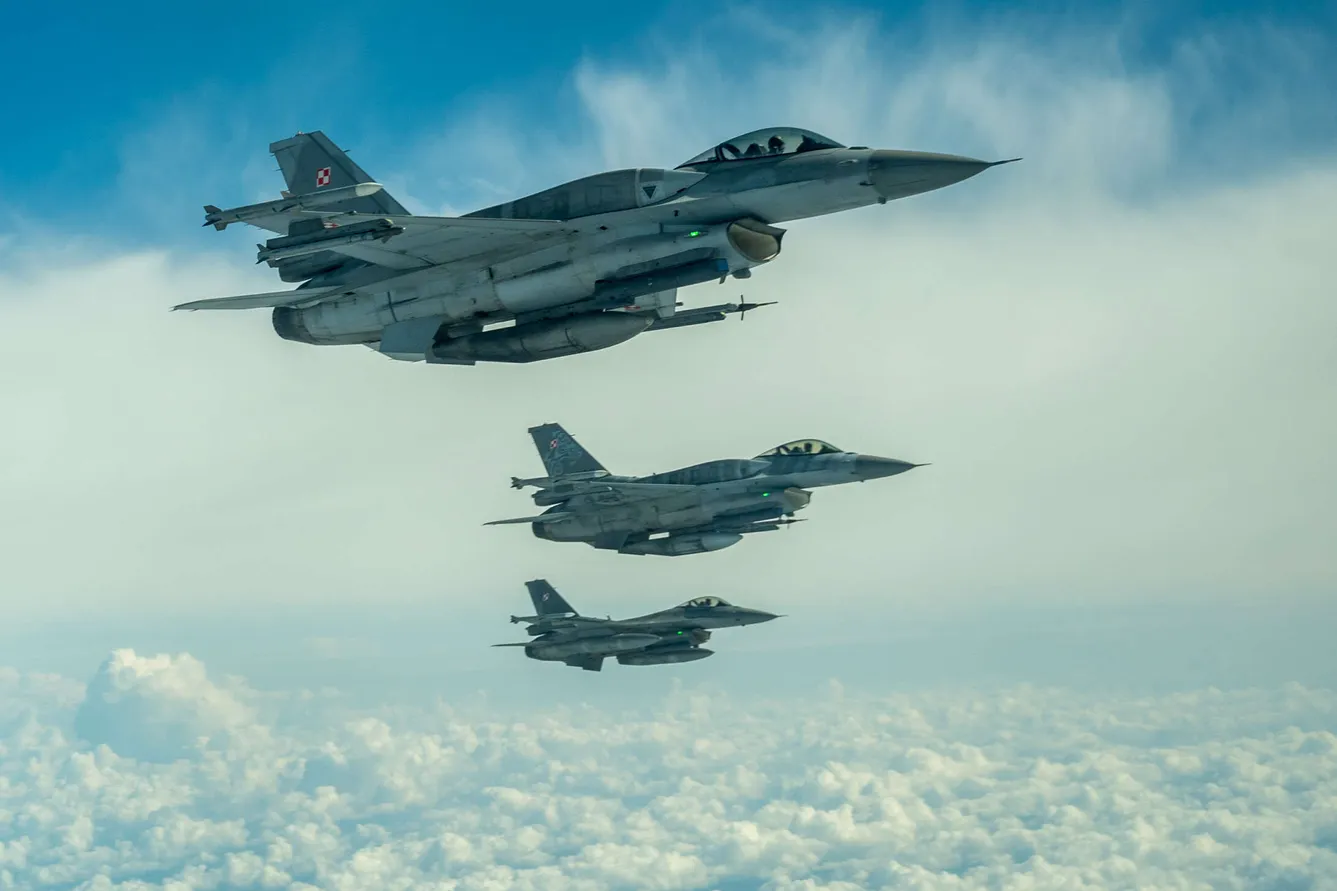
WARSAW, Poland — Poland has changed its rules for military aircraft, allowing its fighter jets to shoot down suspected hostile targets without first visually identifying them. The move is a direct response to repeated provocations from Russian aircraft near Polish airspace.
Under the old rules, a Polish pilot had to fly close enough to an unknown aircraft to see it with their own eyes—checking its type, nationality, and markings—before making a decision to fire. That is no longer the case.
The new procedure is called "positive identification." It allows a pilot or commander to make a decision to shoot based on radar data, information from other systems, and even intelligence passed on by Ukraine. As Major General Ireneusz Nowak, the operational commander of the Polish Armed Forces, explained: "We are therefore much more flexible and responsive."
General Nowak also confirmed that the technical side is ready. He stated that the "targeting pods have already been updated" to support these new, faster engagement rules.
The change was announced in late September 2026 by Deputy Defense Minister Cezary Tomczyk, who said the new procedures would take effect "in the coming days". The goal is to eliminate the time-wasting and dangerous step of requiring pilots to get dangerously close to potentially hostile aircraft.
Poland's air force is now heavily focused on air defense, with General Nowak saying that 80 percent of its attention is currently on protecting the country's skies. The military is also working on acquiring more suitable weapons for the job.
One key project is the integration of the APKWS II rocket system, a cheaper alternative to firing expensive air-to-air missiles at low-cost drones. These rockets will be fitted to Poland's existing F-16 fighter jets and its future FA-50PL light fighter jets.
The policy shift comes after a series of tense incidents. Polish fighter jets have repeatedly intercepted Russian reconnaissance aircraft flying over the Baltic Sea without flight plans and with their transponders turned off, creating risks for civilian air traffic. In September 2025, Polish and Dutch F-35 jets even shot down at least three drones that violated Polish airspace.
By removing the visual identification requirement, Poland is making it clear that it will not hesitate to defend its airspace—and that Russian aircraft approaching from the east will be treated as a potential threat from the moment they are detected.