Education
78% of Children and Teenagers in Finland Use AI, Nationwide Survey Finds
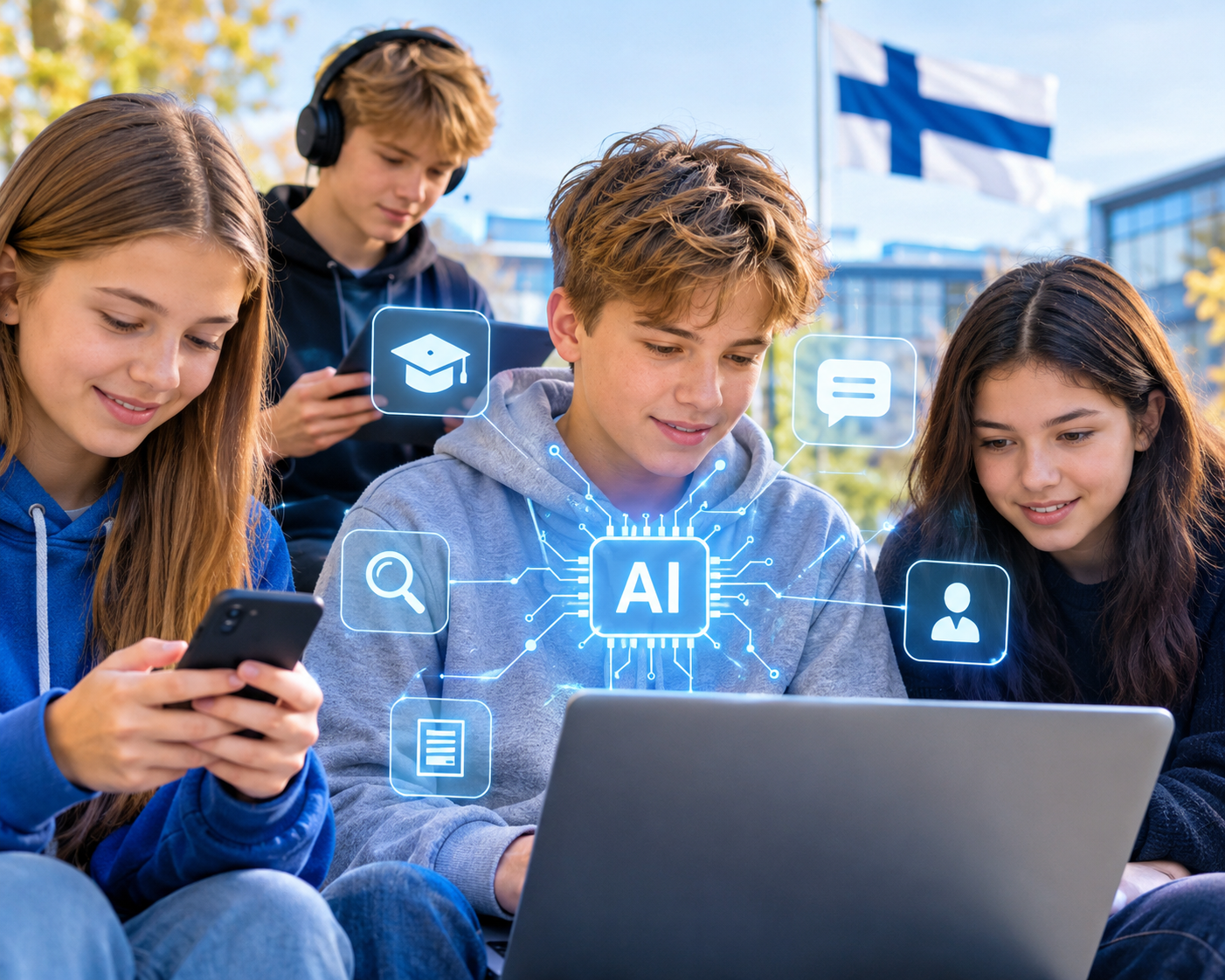
Artificial intelligence is becoming a regular part of everyday life for children and teenagers in Finland, with 78% of young people aged 11 to 17 saying they use AI tools, according to a new nationwide survey.
The findings show that AI is increasingly being used for schoolwork, information searches and personal conversations. Nearly half of the young people who use AI reported using it daily, highlighting how quickly the technology has become part of the younger generation’s routines.
The survey was funded by the Finnish Children’s Foundation Itla and digital wellbeing organisation Digirauha. More than 1,000 children and teenagers participated in the study, which examined their use of artificial intelligence and their experiences with the technology. The responses were collected in September 2026.
AI Becomes a Tool for Learning
Searching for information was the most common reason for using AI, with 67% of respondents saying they used the technology for this purpose. Around 47% reported using AI to help with homework and school assignments.
The trend is also evident among younger pupils. According to the survey, 71% of children in grades four to six already use AI tools.
Mobile phones are the main gateway to the technology. Among young people who use AI, 94% said they access it through their phones.
The results suggest that AI is no longer limited to older students or occasional experiments. It is increasingly being used by children across different school levels, both inside and outside the classroom.
Concerns About Trust and Digital Literacy
Despite the widespread use of AI, the survey identified concerns about young people’s ability to evaluate AI-generated information and content.
More than half of the respondents said they trusted information provided by AI, either fully or to some extent. However, approximately one-third said they found it difficult to distinguish AI-generated images and videos from authentic material.
The challenge was more pronounced among primary and lower secondary school pupils, with nearly 40% reporting difficulties identifying AI-generated visual content.
The findings raise questions about whether children are receiving enough guidance to assess the accuracy of AI-generated answers and recognise misleading images or videos.
As AI tools become more accessible, the ability to verify information and distinguish between authentic and artificial content is becoming increasingly important.
AI Is Also Becoming a Conversation Partner
The survey also found that some young people turn to AI for personal conversations and emotional support.
Around one in five respondents said they had discussed matters with AI that they did not want to share with other people. Among older teenagers, the proportion exceeded one in four.
Meanwhile, 7% said they talked to AI because they had nobody else to speak with.
These findings highlight a more complex aspect of AI use among young people. While the technology can offer information and assistance with everyday tasks, its growing role in personal conversations raises questions about loneliness, social relationships and children’s emotional wellbeing.
Calls for Better AI Education
The organisations behind the survey have highlighted the need for safer digital environments and stronger AI literacy among children and teenagers.
The findings also point to the importance of supporting teachers as AI becomes more common in education. Young people need guidance on how to use these tools responsibly, check the accuracy of their answers and understand their limitations.
Rather than focusing solely on whether children should use AI, the results suggest that families, schools and policymakers must also consider how young people can learn to use it safely and critically.
With more than three-quarters of 11–17-year-olds already using AI, the technology has become a significant part of growing up in Finland. The challenge now is to ensure that its benefits do not come at the expense of reliable information, independent learning or children’s wellbeing.