Politics
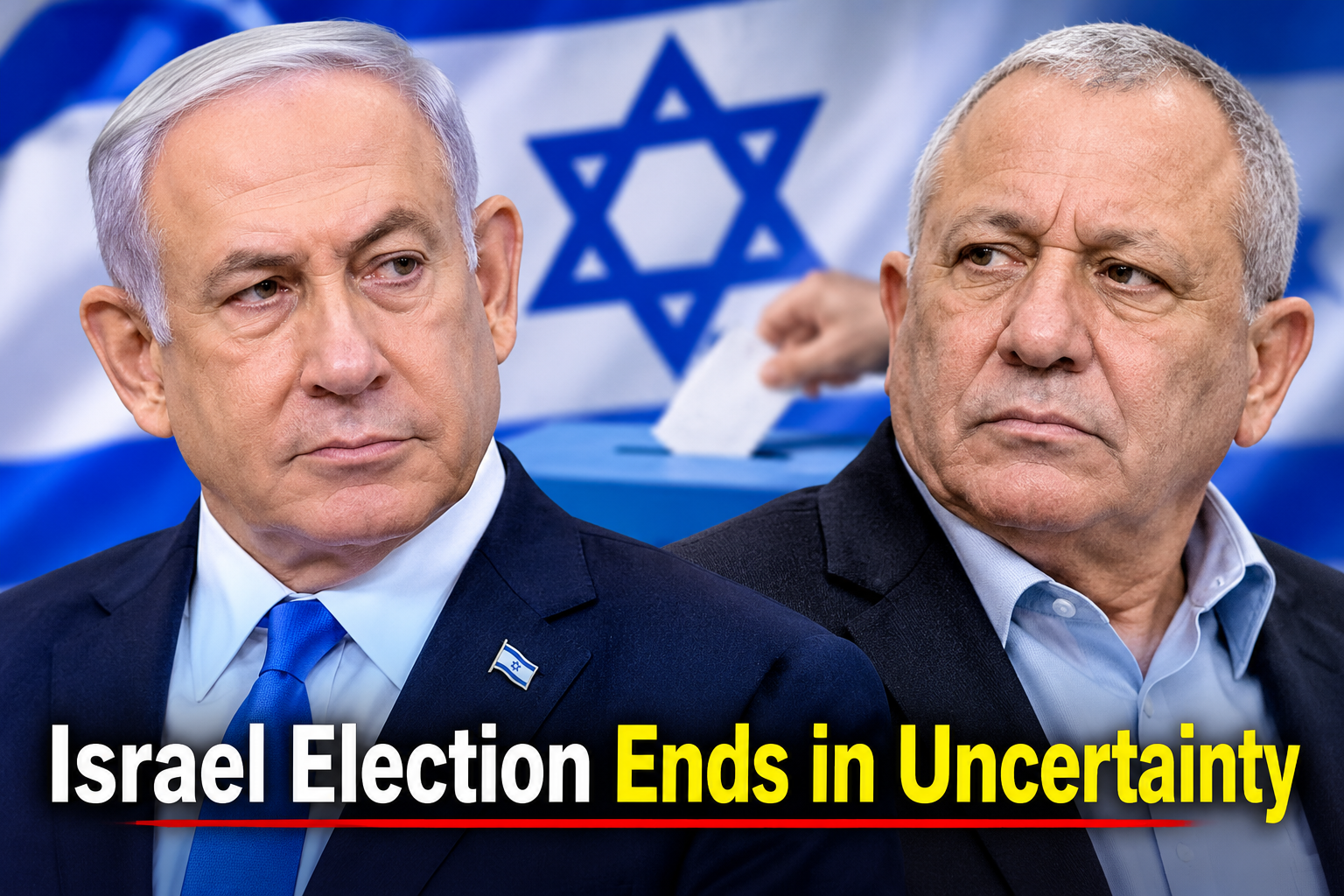
Israel Election Ends in Uncertainty as Netanyahu and Main Rival Fall Short of Clear Victory
JERUSALEM, October 27, 2026:
Israel’s general election appears to have produced no clear winner, with Prime Minister Benjamin Netanyahu and his main challenger, former military chief Gadi Eisenkot, both seemingly short of securing an outright path to power, according to exit-poll projections.
The inconclusive outcome points to a potentially prolonged period of political negotiations in a deeply divided country, where neither the governing coalition nor the opposition is expected to secure the parliamentary majority needed to form a government independently.
The election, held on Tuesday, is Israel’s first general election since the Hamas-led attacks of October 7, 2023, which triggered a devastating war in Gaza and reshaped the country’s domestic politics and regional relations.
Netanyahu Faces a Crucial Political Test
Netanyahu, Israel’s longest-serving prime minister, entered the election seeking to retain power after a turbulent period marked by security failures, military conflicts, domestic divisions and continuing scrutiny over his government’s handling of the October 7 attacks.
His Likud party is competing against a political challenge led by Eisenkot, a former chief of staff of the Israeli military whose centrist Yashar party has emerged as a major force in the opposition.
Eisenkot and other opposition figures have criticised Netanyahu’s leadership, particularly his government’s failure to prevent the October 7 attacks and its subsequent handling of the conflicts that followed.
The election has therefore become a critical test of public confidence in Netanyahu and his political alliances.
However, the exit-poll projections suggest that defeating the incumbent politically may not be enough to guarantee the opposition a governing majority.
Why There Is No Clear Winner
Israel’s electoral system makes it difficult for a single party to win power outright. Voters elect members of the 120-seat Knesset, the country’s parliament, through a system of proportional representation.
A government generally needs the support of at least 61 lawmakers to command a parliamentary majority.
Neither Netanyahu’s right-wing and religious coalition nor the main opposition bloc was projected in pre-election surveys to reach that threshold on its own. Arab-led parties and smaller political groups could therefore play a decisive role in determining the next government.
The final outcome will depend not only on the number of seats won by individual parties but also on their ability to negotiate agreements with potential coalition partners.
The exit polls offer an initial indication of the electoral balance, but they are not official results. The final distribution of parliamentary seats could change as votes are counted and the performance of smaller parties becomes clearer.
Coalition Negotiations Could Take Weeks
If neither major political bloc secures a majority, party leaders will need to negotiate with smaller factions to assemble a viable government.
President Isaac Herzog is expected to consult political parties after the official results are established and select the candidate he believes has the best chance of forming a coalition.
Under Israel’s political system, the designated candidate can have up to 42 days to put together a government. If the effort fails, another candidate may be given an opportunity. A failure to establish a government could eventually lead to another election.
Smaller parties, including those representing religious and other specific constituencies, could gain considerable bargaining power during the negotiations.
The possibility of a prolonged political stalemate also means that the exit polls alone cannot determine whether Netanyahu will remain prime minister or whether the opposition will eventually succeed in replacing him.
Security and Military Service Dominate the Debate
Security has remained central to the election campaign, with voters assessing the consequences of the October 7 attacks and Israel’s subsequent military operations.
The question of military service for ultra-Orthodox Jewish men has also emerged as a major domestic dividing line. Netanyahu’s political alliances have included religious parties that support exemptions, while Eisenkot has pledged to end the existing exemptions.
The competing positions have exposed divisions within Israeli society over national security, religious obligations and the distribution of military responsibilities.
Other issues, including the government’s conduct during the wars, relations with international partners and concerns about Israel’s political direction, have also shaped the contest.
What Happens Next?
For now, the election has left Israel facing continued uncertainty over who will lead its next government.
Even if one party emerges as the largest in parliament, it will not automatically secure the premiership. The decisive question will be whether its leader can gather enough support from other parties to command a majority in the Knesset.
The coming days are expected to bring a clearer picture as official vote counts replace the initial projections. However, if the parliamentary balance remains fragmented, negotiations over coalition agreements could continue for weeks.
The election’s final political outcome will determine whether Netanyahu can extend his time in office or whether his opponents can build a new governing alliance.
For Israeli voters, the immediate result appears to offer neither side a decisive victory, leaving the country’s political future dependent on the difficult negotiations that follow.